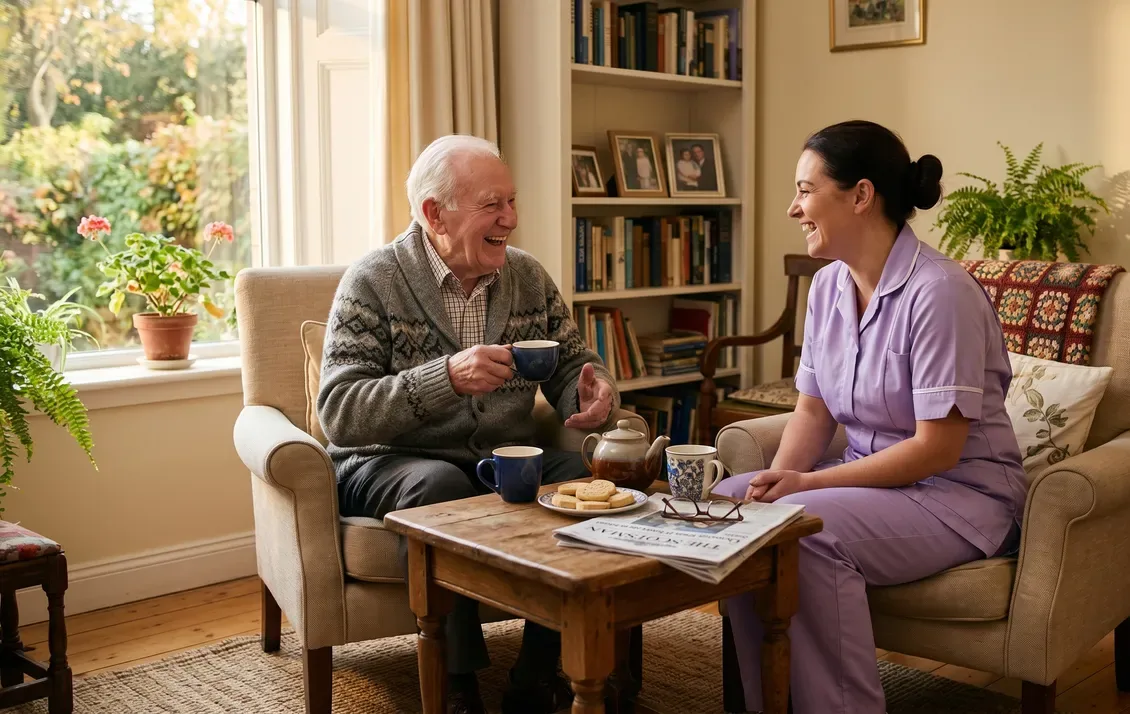
This gentle guide will walk you through the first steps, so you can feel confident, informed and supported from the very start.
1. What does "care at home" actually mean?
Care at home simply means receiving support in your own house to stay safe, comfortable and independent. It is flexible, personal and tailored around your life — not the other way around.
Care at home can include:
- Personal care (washing, dressing, toileting)
- Help preparing meals
- Medication prompts
- Help with mobility or transfers
- Companionship & emotional support
- Light housework and laundry
- Shopping or errands
- Social activities and community engagement
The goal is to help people live well at home for as long as possible.
2. Look at what's becoming difficult
Rather than starting with "Do we need care?", it's easier and more reassuring to ask:
"What tasks are becoming harder, and what would make life easier?"
Common early signs include:
- Struggling with showers or washing
- Forgetting medication
- Reduced mobility or confidence
- Increased isolation or loneliness
- Difficulty lifting pans or preparing meals
- More falls or near-misses
- Family feeling worried or stretched
Recognising these early helps prevent crises later.
3. Have a gentle conversation with your loved one
Bringing up care can feel delicate. Here are ways to make it easier:
- Choose a calm, quiet moment
- Use reassurance, not pressure
- Focus on independence, not "care"
- Suggest trying small help first
- Make it about wellbeing and safety
Often, people are relieved once the conversation begins.
If you would like, we can sit in and support these talks to make the process comfortable for everyone.
4. Research local care providers
Look for providers who:
- Are truly local (not remote call centres)
- Have good Care Inspectorate grades
- Use small, consistent teams
- Match carers to your loved one
- Communicate clearly
- Are transparent with pricing
- Have a warm, respectful ethos
At Quality Care Scotland Ltd, we focus on personalised, relationship-based care, delivered by carers who live locally around Helensburgh, Rhu and Cardross.
5. Book a home visit assessment
This is the easiest, most reassuring next step.
During our visit, we will:
- Listen carefully to your needs and concerns
- Get to know your routines and preferences
- Assess safety and mobility
- Talk through the best options
- Build a personalised care plan
This assessment is free, friendly and pressure-free.
6. Start small and build comfortably
Many families begin with:
- One or two weekly visits
- A morning shower each day
- Evening meal-prep help
- A weekly companionship visit
As confidence grows, care can be adjusted or increased at your pace.
7. Remember — you're not alone
No family should have to navigate this journey without help. Whether you live in Helensburgh, Rhu, Cardross or the surrounding areas, we're here to make the process easier, clearer and kinder.
If you're unsure what to do next, a simple conversation with us can bring clarity and peace of mind.